Open-source technology for disaster resilience
We invite researchers, engineers, responders, communities, and humanitarian specialists to build and document open-source technology—including AI—for disaster resilience.
Our focus
Our work follows the lifecycle of every disaster.
Anticipate
Early warning, risk modeling, and preparedness so communities can act before disaster hits.
Respond
Real-time situational awareness, coordination, and decision support when every minute counts.
Recover
Rebuilding faster and more equitably, and growing long-term resilience.
What we're building
Ten tracks—nine defined response gaps plus one open track—with a working reference starter for each:
Our values
Human-first AI
People, dignity, and safety come before the technology.
Open collaboration
We work in the open and share what we build.
Accessible by design
Tools that reach the communities and responders who need them — not just those with the most resources.
Science over Secrecy
We publish, collaborate, and build in the open whenever possible.
Our mission
We believe advanced AI should serve people first. Our mission: gather researchers, engineers, responders, and humanitarians around one commitment — technology in service of human dignity, in our most urgent hours.
When earthquakes, floods, wildfires, and storms upend lives, hours decide outcomes. We research, prototype, and share technology that can help communities anticipate, respond, and recover—subject to local validation and accountable adoption.
Our vision
We envision a future where every community, regardless of geography or resources, has access to trustworthy AI that helps reduce suffering before disasters happen, supports responders during crises, and accelerates recovery afterward.
Our approach
We draw on documented frameworks such as Sendai, HXL, CAP, Sphere, and the UN cluster system, and publish where and how they inform each prototype. Referencing a framework is not certification or proof of compliance. Read the research →
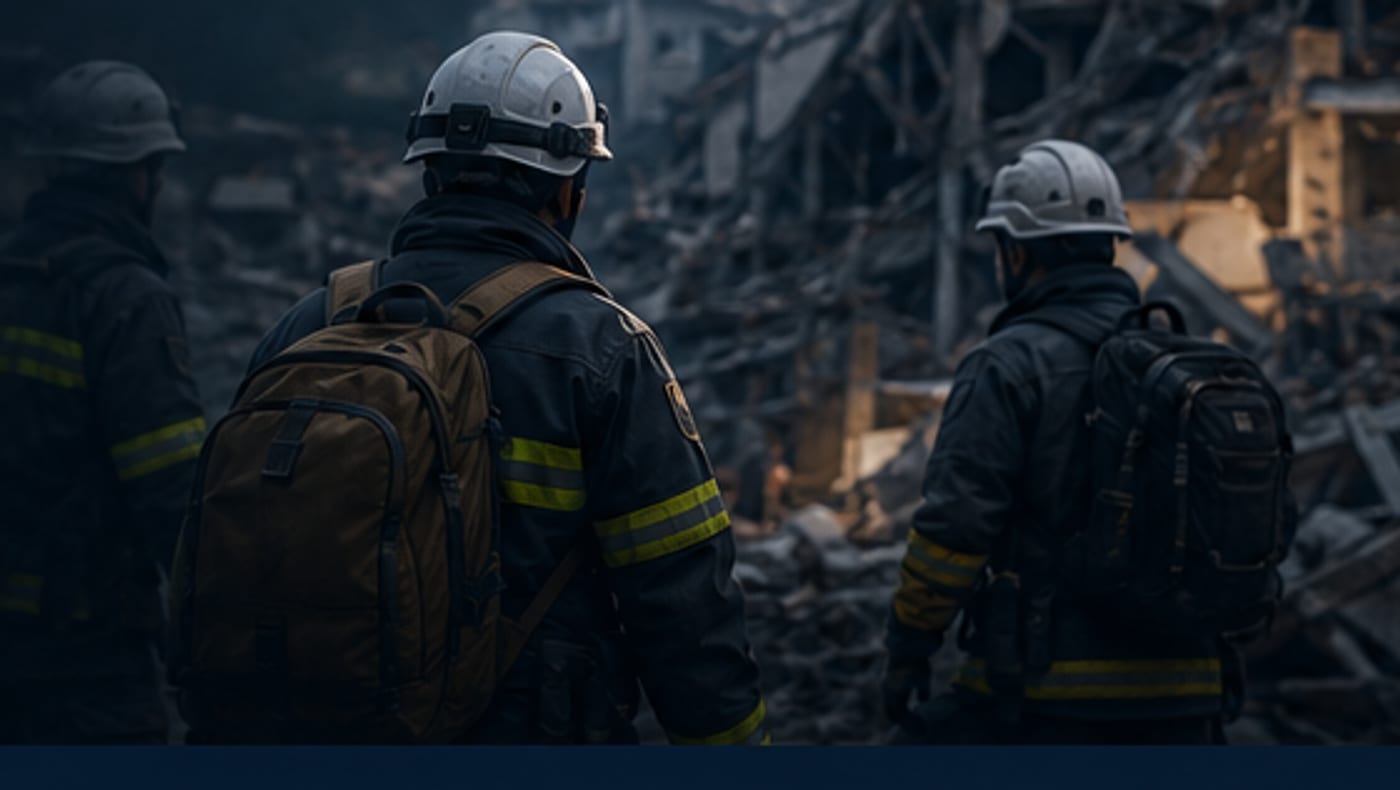
Venezuela + Colombia Earthquake Response
This open-source initiative began with Venezuela's earthquake recovery and expanded after the August 10 earthquake in Colombia. From August 11–16, participants are building and documenting reusable prototypes with public, synthetic, or sample data; Demo Day is August 17.
- Format
- Online · Global
- Kickoff
- Wed, Jul 8
- Build
- Aug 11 – Aug 16
- Demo day
- Mon, Aug 17
There’s a place for you here.
We’re inviting researchers, engineers, responders, humanitarians, community experts, and reviewers who want technology to serve people in crisis. Whether you write code, study disasters, coordinate relief, translate, or test assumptions—there’s a place for you here.